
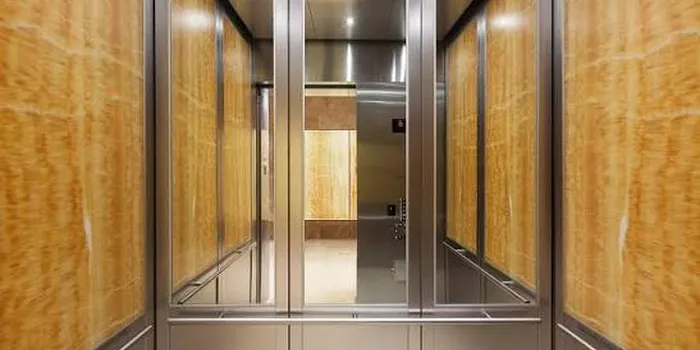
Lift mirrors are not just for checking your hair. Here is why lifts have reflective surfaces, from safety and wheelchair access to space perception.
Step into almost any lift and you will notice it immediately: a mirror, or at the very least a reflective panel, gleaming back at you. Most passengers assume the feature exists purely for vanity, a chance to fix your hair, adjust your clothes, or check your appearance before the doors open on your destination.
In reality, the mirrors inside lifts serve a far more important purpose, with the design choice rooted in safety, accessibility, and comfort.
One of the main reasons for fitting mirrors inside lifts is that they give users a wider view of what is a very small enclosed cabin, allowing people to see what is happening around them.
The reflection helps a passenger remain aware of everyone else inside the lift, including where they are standing and what they are doing, which delivers a genuine security advantage in a space where you cannot simply walk away from someone.
The mirrors also prove their worth while getting in or out of the cabin, particularly for passengers carrying luggage, shopping bags, or other bulky items that block their line of sight.
For wheelchair users, the benefit is even more significant. Many lifts are simply too small for a wheelchair to turn around comfortably once inside, which would otherwise make exiting a challenge.
With a mirror in place, a wheelchair user can use the reflection to see what is behind them and carefully reverse out of the lift without needing to turn the chair around, making both entry and exit far safer and easier.
Then there is the psychological layer. Lifts can feel deeply uncomfortable, especially for people who dislike being in enclosed spaces, and a bare, boxy cabin only sharpens that unease.
By reflecting the interior, a mirror creates the impression of additional space, making the confined area feel less narrow and restrictive than it actually is.
The mirror also offers passengers a simple distraction during the journey. Checking your appearance or observing your surroundings beats staring blankly at the doors or the floor, and it can make the ride feel shorter and less tedious, particularly when the lift is crowded or takes several seconds to climb to your floor.
Keen observers may have noticed that lift mirrors are sometimes draped with a piece of cloth or protective material. This typically happens when the cabin is being used to transport furniture, equipment, or construction materials, shielding the reflective surface from damage while the heavy goods are moved in and out.
Frequently Asked Questions
Why do lifts have mirrors?
Mainly for safety and comfort. Mirrors widen the user’s view of the small cabin, aid people entering and exiting with bulky items, help wheelchair users reverse out, and make the space feel bigger and less cramped.
Do lift mirrors improve security?
Yes. The reflection allows passengers to remain aware of everyone else in the cabin, including where they are standing and what they are doing.
How do mirrors help wheelchair users in lifts?
Some lift cabins are too small for a wheelchair to turn around. A mirror lets the user see behind them and reverse out of the lift safely without turning the chair.
Why do lifts with mirrors feel less cramped?
The reflection creates an impression of additional space, making the confined cabin feel less narrow and restrictive, which helps passengers uneasy about enclosed spaces.
Do mirrors make lift journeys feel shorter?
They can. By providing a simple distraction, they stop passengers from staring at the doors or floor, which makes the ride feel less tedious, especially in crowded or slow lifts.
Why are lift mirrors sometimes covered?
Cloth or protective material is usually placed over them when the lift is being used to move furniture, equipment, or construction materials, to protect the reflective surface.
