
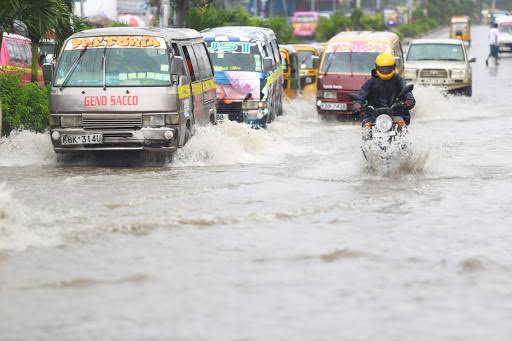
El Niño brings heavy rains to East Africa but drought to India, Indonesia and southern Africa. Experts explain the geography behind the split.
El Niño is commonly associated with increased rainfall, but the phenomenon does not treat every region the same way. While Kenya braces for unusually heavy October-December short rains, governments elsewhere in the world are preparing for extreme drought, and there is a fascinating geographical reason behind the split.
El Niño occurs when ocean temperatures in the central and eastern tropical Pacific become warmer than usual.
That warming disturbs atmospheric circulation and reshapes weather patterns far beyond the Pacific Ocean. The disruption changes where clouds form and where moisture is carried, which is why some parts of the world end up soaked while others turn significantly drier.
It is a common misconception that El Niño only means rain and floods. In reality, it drives a whole range of weather diversions across the globe.
Where El Niño Brings Dry Conditions
The World Meteorological Organisation (WMO) has identified several regions where below-normal rainfall becomes more likely as the current El Niño strengthens.
India and the Monsoon
At the top of the list is the Indian subcontinent, where El Niño can interfere with the summer monsoon, a lifeline for agriculture and water supplies.
India has already recorded below-average monsoon rainfall during parts of the 2026 season, with the country’s meteorological authorities reporting rainfall 15 percent below average between June 1 and September 9.
Southeast Asia and Indonesia
Southeast Asia is also staring at heightened drought risk. Indonesia, for example, expects a delayed and shorter rainy season, with about 61 percent of the country’s land area forecast to experience a delayed onset of rains.
The dryness has already helped fuel severe wildfires in parts of Indonesia, where prolonged dry conditions have left forests and peatlands dangerously vulnerable to burning.
Australia
Australia is another classic El Niño casualty, typically experiencing hotter and drier conditions, especially across the eastern and southern parts of the country.
According to the United Nations, El Niño is not caused by climate change, although climate change can worsen some of its impacts. Forecasters cited by the UN expect the current pattern to strengthen in the coming months and potentially persist into early 2027.
For eastern Africa, including Kenya, Somalia, and Tanzania, El Niño generally means increased rainfall, which raises the risk of flash floods, rivers bursting their banks, landslides, and homes going under water.
Southern Africa tells the opposite story. Countries including Zambia, Malawi, Mozambique, and South Africa are expected to see reduced rainfall during El Niño events, which can trigger prolonged dry spells, failed crops, shrinking water sources, and vanishing pasture for livestock.
The UN points to these contrasting outcomes as the clearest proof that El Niño cannot be treated as a single continent-wide weather event.
Back home, the national and county governments have intensified preparations for the coming rains.
Several high-risk counties have been put on notice, with residents asked to vacate certain areas, including some Nairobi estates, and relocate to safer ground ahead of the October-December season.
Frequently Asked Questions
Why does El Niño affect regions differently?
Because the warming of the central and eastern tropical Pacific disrupts atmospheric circulation, shifting where clouds form and where moisture travels. Some regions receive more rain while others become significantly drier.
Is El Niño caused by climate change?
No. According to the United Nations, El Niño is not caused by climate change, although climate change can worsen some of its impacts.
Which regions get more rain during El Niño?
Eastern Africa, including Kenya, Somalia, and Tanzania, generally sees increased rainfall, raising the risk of flash floods, landslides, and overflowing rivers.
Which regions get less rain during El Niño?
The Indian subcontinent, Southeast Asia including Indonesia, Australia, and southern African countries such as Zambia, Malawi, Mozambique, and South Africa typically experience below-normal rainfall.
How dry has India been this year?
India’s meteorological authorities reported monsoon rainfall 15 percent below average between June 1 and September 9, 2026.
How bad is the drought risk in Indonesia?
About 61 percent of Indonesia’s land area is forecast to experience a delayed onset of rains, with dryness already contributing to severe wildfires in forests and peatlands.
How long will the current El Niño last?
Forecasters cited by the UN expect the pattern to strengthen in the coming months and potentially persist into early 2027.
What is Kenya doing to prepare?
National and county governments have intensified preparations, with high-risk counties on notice and residents in certain areas, including some Nairobi estates, asked to move to safer ground.
