
The government's target of approximately 60,000 jobs therefore represents a projected economic impact rather than employment that has already been created.
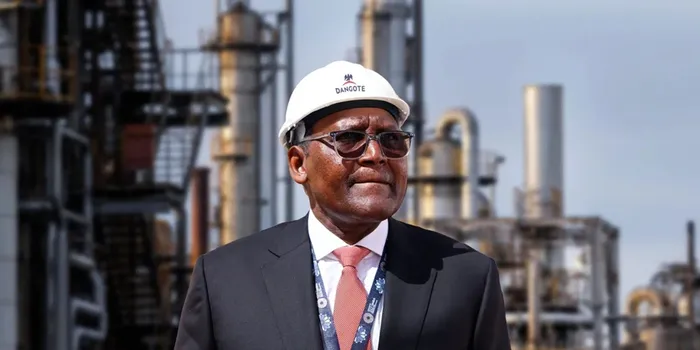
Kenya is set to begin work on a proposed Sh2.2 trillion oil refinery in Lamu, a major investment backed by Nigerian billionaire Aliko Dangote that the government says could create about 60,000 jobs and transform the country’s position in the regional energy market.
President William Ruto is expected to lead the groundbreaking ceremony for the East Africa Refinery in Lamu on Wednesday, September 30, 2026, marking the start of what the government has described as one of the country’s largest industrial investments.
The proposed refinery will be located in Kililana, Lamu West, and is planned to have a processing capacity of up to 700,000 barrels of crude oil per day. The facility is expected to serve Kenya as well as neighbouring markets across East and Central Africa.
60,000 Jobs Expected
The refinery is projected to generate approximately 60,000 jobs, with employment opportunities expected across construction, engineering, transport, logistics, manufacturing, energy and other supporting industries.
President Ruto has previously said the project will provide opportunities for young people while creating additional economic activity around Lamu and the wider Coast region.
Deputy President Kithure Kindiki has also described the investment as a major industrial project that could create more than 50,000 jobs and stimulate economic activity in the region.
Beyond direct employment at the refinery, the project is expected to support businesses involved in transportation, construction, equipment supply, hospitality and other services.
A Sh2.2 Trillion Investment
The refinery is estimated to require an investment of about Sh2.2 trillion, equivalent to roughly $17 billion based on estimates reported earlier this year.
The final investment cost has not been publicly confirmed by Dangote Industries, but the scale of the proposed facility would make it one of the largest private-sector industrial projects in Kenya.
The project follows Dangote’s proposal to establish a major refinery in Kenya after the businessman indicated that his group was prepared to develop a facility similar to its refinery in Nigeria.
The Nigerian Dangote refinery, located in Lekki, has a processing capacity of 650,000 barrels of crude oil per day. President Ruto visited the facility in Lagos on September 25 and said the planned Kenyan refinery would be bigger and create about 60,000 jobs.
Why Lamu Was Chosen
Lamu’s strategic location on the Indian Ocean is central to the project.
The refinery is expected to take advantage of Lamu Port and the wider Lamu Port-South Sudan-Ethiopia Transport (LAPSSET) Corridor, which is designed to connect Kenya’s coast with markets in neighbouring countries.
The location could allow crude oil and petroleum products to be transported through the port and distributed to inland markets.
A vessel carrying project machinery and construction materials recently arrived at Lamu Port, signalling preparations for the development.
Regional Fuel Supply
The proposed refinery is expected to supply petroleum products to Kenya and other markets in the region, including Uganda, Tanzania, Rwanda, Burundi, South Sudan, Ethiopia and the Democratic Republic of Congo.
Kenya and other East African countries currently depend heavily on imported refined petroleum products. A large regional refinery could reduce the distance petroleum products need to travel from overseas suppliers and create a more direct supply chain for regional markets.
The government has also linked the project to Kenya’s ambition of becoming a regional energy and logistics hub.
Boost for Lamu Port and Local Economy
The refinery is expected to increase activity at Lamu Port and stimulate investment in surrounding areas.
The project could create demand for construction companies, engineers, transport operators, equipment suppliers, logistics firms and other businesses.
The development is also expected to support industries that use petroleum products and could encourage the growth of petrochemical-related businesses around the refinery.
Government officials have described the investment as part of a wider effort to move Kenya from being primarily a fuel importer toward becoming a regional petroleum processing and distribution centre.
Potential for New Industries
President Ruto has said the refinery could generate additional industries beyond petroleum processing.
These could include the production of fertilisers, chemicals and packaging materials, creating opportunities for businesses operating around the refinery and supporting industries.
The emergence of these industries could expand the economic impact of the project beyond the refinery itself.
Land Dispute Raises Concerns
The planned groundbreaking comes as some residents in Lamu have raised concerns over land and compensation.
Residents from Magogoni Kwa Sasi have filed a legal challenge seeking to stop the refinery’s groundbreaking, citing unresolved land compensation grievances. The case involves several government agencies and Dangote Industries.
The legal dispute is one of the issues that will need to be addressed as the project moves into implementation.
What Happens Next?
The immediate milestone is the planned groundbreaking ceremony in Lamu on September 30.
According to government statements, the refinery is expected to take several years to construct. Earlier reports indicated that construction could take about 30 months once work begins, although the final construction schedule will depend on project implementation and financing arrangements.
If completed as planned, the refinery would significantly increase Kenya’s petroleum-processing capacity and give the country a larger role in supplying fuel to the wider East and Central African markets.
For Lamu, the project could also become a major catalyst for employment, infrastructure development and investment.
For Kenya, the proposed Sh2.2 trillion refinery represents a major industrial undertaking whose success will depend on financing, construction, land and regulatory issues, as well as the development of the supporting infrastructure needed to operate such a large facility.
The government’s target of approximately 60,000 jobs therefore represents a projected economic impact rather than employment that has already been created.
