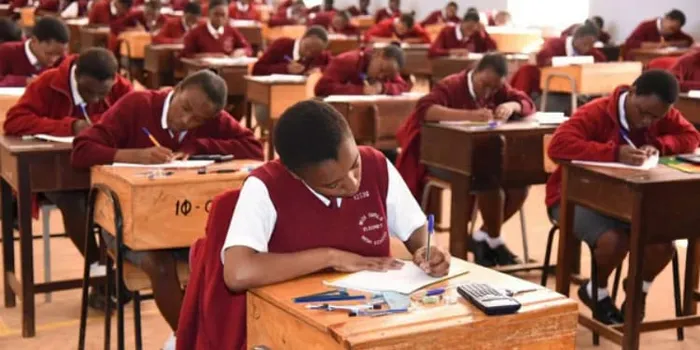
Education officials in Garissa have asked Parliament to introduce Arabic from Grade 4 and integrate madrasa learning, citing Ruto's June reform directive.
Members of Parliament are weighing proposals to give Arabic formal standing in Kenya’s school curriculum, after education officials in Garissa asked for the language to be taught starting at Grade 4.
The request was tabled on September 30, 2026, during public participation on six Education Reform Bills, in sessions staged at Garissa University and Fort Hall in Lamu County.
Garissa Sub-County Director of Education Rashid Mohammad told the hearings that an early start is what would make mastery possible.
“Arabic should be introduced at Grade 4 in our schools to give children an opportunity to master the language earlier in life,” he stated.
Backing the call, Garissa County Education Board Secretary Abdi Maalim argued that Arabic deserves a place in the formal system alongside the existing learning pathways, and explained why the region sees the two school systems as inseparable.
Children in the area, he noted, typically begin their education in madrasas long before they ever set foot in a formal classroom, which leaves a gap between the two experiences.
“We are 90 per cent pastoralists and 95 per cent Muslims. Our journey to learning does not begin in a formal classroom but under a tree or in a madrasa at a very young age,” he said.
The stakeholders went further, asking the government to build a framework that formally weaves madrasa education into the national curriculum.
“We propose that the Ministry of Education sets up a task force to find the best way to implement madrasa education in our curriculum. We have enough books; Arabic is richer in literature than Chinese, German and other foreign languages,” Maalim added.
The appeal did not emerge from nowhere. In June, President William Ruto directed Education Cabinet Secretary Julius Ogamba to pursue reforms that would formally recognise and integrate madrasa schooling, informal religious instruction, and pastoralist learning into the national education system.
Ruto argued that the changes would spare children in marginalised areas from exclusion rooted in geography or in the lack of official recognition for alternative learning routes.
“Some children in northern Kenya and other marginalised regions remain outside the formal education system because of certain alternative learning pathways that have not been adequately recognised and accommodated within our education framework,” he noted.
With Parliament now collecting views on the reform Bills until October 2, the Garissa submissions will feed into the committee’s report, alongside proposals gathered from the other counties on the tour.
Frequently Asked Questions
What have education officials in Garissa proposed?
That Arabic be introduced as a subject from Grade 4, so that children can build proficiency in the language from an earlier age, and that a task force be set up to work out how madrasa education can be integrated into the national curriculum.
Who made the proposals and where?
Garissa Sub-County Director of Education Rashid Mohammad and Garissa County Education Board Secretary Abdi Maalim, during public participation on six Education Reform Bills at Garissa University and Fort Hall in Lamu County on September 30, 2026.
Why do Garissa stakeholders link Arabic to madrasa education?
Because most children in the region start learning in madrasas before joining formal schools. Maalim said the region is 90 per cent pastoralist and 95 per cent Muslim, with learning journeys that begin “under a tree or in a madrasa” rather than in a classroom.
What did President Ruto direct in June?
He instructed Education CS Julius Ogamba to pursue reforms formally recognising and integrating madrasa, informal religious learning and pastoralist instruction into the education system, so that children in marginalised regions are not shut out of formal education.
Where do the proposals go from here?
They form part of submissions on the Education Reform Bills, with written memoranda due by October 2, 2026, after which the National Assembly Education Committee will consolidate views from all counties into its report.
