Rigathi Gachagua says opposition leaders must negotiate clear political and development commitments with Mt Kenya before expecting the region to support a presidential candidate in the 2027 elections.
Democracy for the Citizens Party (DCP) leader Rigathi Gachagua has told opposition leaders seeking a united presidential candidate in 2027 that securing support from the Mt Kenya region will require negotiations and clear political commitments.
Gachagua said the region would no longer support a presidential candidate without first reaching an agreement addressing its political and development interests.
His remarks come as opposition leaders explore the possibility of presenting a single candidate to challenge President William Ruto in the 2027 General Election.
The opposition figures involved in the consultations include Wiper Patriotic Front leader Kalonzo Musyoka, Jubilee Party’s Fred Matiang’i, People’s Liberation Party leader Martha Karua, Democratic Party leader Justin Muturi, Democratic Action Party-Kenya leader Eugene Wamalwa and Linda Mwananchi Movement leader Edwin Sifuna.
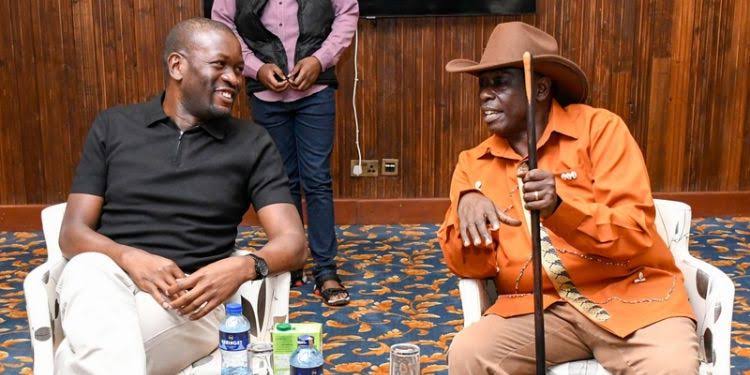
Speaking at the ‘Ngemi Cia Watho’ event at a hotel in Thika town, Murang’a County, on Saturday, Gachagua said residents of Mt Kenya had learnt lessons from the 2022 elections, when they overwhelmingly supported Ruto without first securing a formal agreement on the region’s interests.
Addressing Sifuna, who attended the event, the former Deputy President said the region had previously given its votes without negotiating specific political commitments.
“Lawyer Sifuna, I have said we here at the Mountain, we gave our votes freely. We just voted like that…without thinking or having talks,” he said.
“This time, this time…to get the Mountain votes, there must be talks.”
Gachagua added that the region would carefully assess the leaders seeking its support before making a political decision.
“We will look at whom we are talking to. We want to be very careful,” he stated.
The remarks signal Gachagua’s intention to make negotiations a central part of any political arrangement involving Mt Kenya ahead of the next general election.
The Mt Kenya region has remained an influential voting bloc in Kenya’s presidential elections, with its support often playing a significant role in determining electoral outcomes.
In the 1992 General Election, votes from the region were divided between Kenneth Matiba and Mwai Kibaki, whose separate candidacies contributed to a fragmented challenge against President Daniel arap Moi.
Kibaki later consolidated much of the region’s support in the 1997 election, although he lost to Moi.
In 2002, Mt Kenya voters largely backed Kibaki’s National Rainbow Coalition (NARC), helping him win the presidency. The region also supported him in the disputed 2007 election.
The political alignment continued in the 2013 and 2017 elections, when the region strongly backed the Jubilee alliance led by Uhuru Kenyatta and his running mate, Ruto.
The 2022 election marked another political shift, with Mt Kenya voters largely supporting Ruto despite his falling out with then President Uhuru Kenyatta.
Gachagua played a key role in mobilising support for the Kenya Kwanza alliance, which went on to win the election.
The former Deputy President also called on lawyers from the Mt Kenya region to take an active role in upcoming political party primaries.
His appeal highlighted the importance of internal party elections in determining candidates and shaping the region’s political direction ahead of the 2027 polls.
Gachagua’s latest remarks place the region’s political interests and its role in coalition negotiations at the centre of the ongoing discussions among opposition leaders.
