
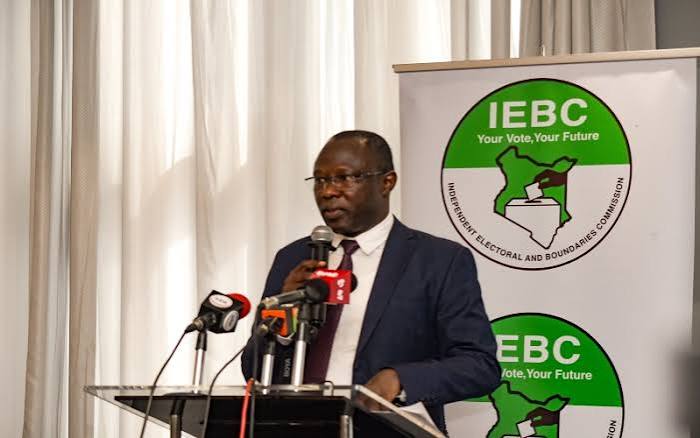
The High Court in Malindi has temporarily stopped IEBC from conducting interviews for its CEO position after a petition challenged the transparency of the recruitment process.
High Court Blocks IEBC Interviews for CEO Position
The Independent Electoral and Boundaries Commission (IEBC) has been temporarily barred from conducting interviews for its Commission Secretary and Chief Executive Officer position following a High Court order.
The High Court in Malindi issued conservatory orders on Thursday, November 5, 2026, stopping the commission from proceeding with the planned interviews pending the hearing and determination of a petition filed by a Malindi resident.
According to court documents, the petitioner questioned the transparency of the recruitment process, arguing that IEBC had not clearly demonstrated how it identified applicants who met the requirements for shortlisting.
The petitioner also raised concerns over the inclusion of foreign nationals in the list of shortlisted candidates, arguing that the position is reserved for Kenyan citizens.
In its ruling, the court certified the petition as urgent and issued orders preventing IEBC from conducting the interviews until the case is heard and determined.
The decision comes days after IEBC addressed concerns about foreign applicants in the recruitment process.
The commission confirmed that foreign nationals had applied for the position but maintained that they were eliminated during the preliminary assessment for failing to meet the Kenyan citizenship requirement.
IEBC said it verified applicants’ national identification documents, citizenship status and academic qualifications before preparing the final shortlist.
“Upon verification of national ID, citizenship and academic credentials, the final shortlist contains only Kenyan citizens. All foreign applicants were disqualified at the preliminary stage for not meeting the citizenship requirement,” the commission stated.
On October 28, IEBC published a shortlist of nine candidates, comprising seven men and two women.
The commission had scheduled interviews for November 12 and 13, 2026, with candidates expected to receive details of their interview venues individually.
The Malindi court order now puts the planned exercise on hold pending further court proceedings.
The latest ruling followed another legal challenge to the recruitment process filed by National Liberal Party (NLP) leader Augustus Kyalo Muli.
Muli filed a petition on November 4, 2026, questioning IEBC’s decision to outsource key stages of the recruitment exercise to a private consultancy firm.
He argued that the IEBC Act assigns appointment responsibilities and powers to the commission and that these functions cannot be transferred wholesale to a private entity.
The petitioner also raised concerns over the commission’s failure to disclose the recruitment scoring matrix, evaluation criteria and contractual arrangements with the consultancy.
However, the Milimani High Court declined to certify the separate application as urgent.
Lady Justice Grace Aburili questioned why the matter had been brought as an urgent application, noting that the recruitment exercise had been publicly known for some time and that the application period had closed in August.
“I have perused the Petition and Notice of Motion dated November 3 filed under certificate of urgency. I observe that the application period closed on 11/8/2026 and candidates were longlisted and shortlisted. The shortlisted candidates are scheduled for 12th and 13th November 2026. I am not satisfied that the application is urgent, as the petitioner has had knowledge of the process being undertaken by the 1st Respondent and is in the public domain,” Justice Aburili stated.
The two court matters raise separate questions about the IEBC recruitment exercise: the transparency of shortlisting and the commission’s use of an external consultancy.
