
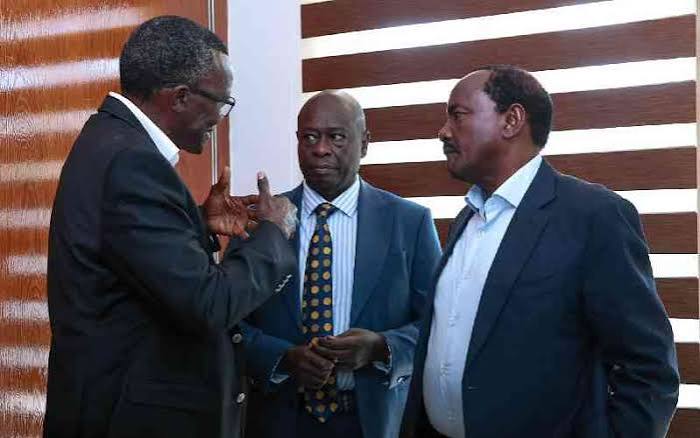
IEBC Criticises Gachagua, Kalonzo and Sifuna Over Walkout From 2027 Election Talks
The Independent Electoral and Boundaries Commission (IEBC) has criticised opposition leaders who walked out of a consultative meeting on preparations for the 2027 General Election, saying their decision undermined efforts to address electoral concerns through dialogue.
IEBC Chairperson Erastus Ethekon said the leaders abandoned an opportunity to engage the commission on its preparedness, proposed reforms and measures aimed at ensuring credible elections.
The leaders, led by former Deputy President Rigathi Gachagua, Wiper Party leader Kalonzo Musyoka and Nairobi Senator Edwin Sifuna, walked out of Thursday’s meeting in Nairobi after expressing dissatisfaction with the agenda.
They argued that the commission had failed to prioritise fundamental electoral reforms they wanted discussed ahead of the August 2027 General Election.
In a statement issued on Friday, November 20, Ethekon said the meeting had been organised to allow political parties from both the government and opposition sides to assess the commission’s preparedness, raise concerns and identify areas requiring cooperation.
“The Commission, however, regrets that a section of the Opposition leaders opted to leave the meeting after making their preliminary remarks and presenting their demands, before the Commission could make its presentation and substantive dialogue could commence,” he said.
Ethekon added that the walkout denied the opposition an opportunity to receive firsthand information about IEBC’s progress, operational challenges and preparations for the upcoming elections.
He also noted that the commission and the public missed an opportunity to hear directly from opposition leaders about their proposed electoral reforms and demands.
Opposition Outlines Four Key Electoral Reform Demands
The walkout followed a meeting convened by the opposition under the People’s Coalition on Electoral Reforms, led by former Chief Justice David Maraga, former Attorney General Justin Muturi and ODM’s Caroli Omondi.
The coalition presented four major proposals that it wants addressed ahead of the 2027 elections.
They include:
- A clean, accurate and verifiable voters’ register.
- Abolition of the national presidential tallying centre at Bomas of Kenya.
- Introduction of electronic voting for Kenyans living abroad.
- Mandatory livestreaming of voting, counting and announcement of results at polling stations and tallying centres.
Maraga said the proposals were necessary safeguards for credible elections, maintaining that the commission must demonstrate independence and preparedness.
“We will not rest until the Commission is freed from state capture and Kenyans have a free, fair and credible election,” he said.
Kalonzo also defended the decision to leave the meeting, saying opposition leaders had attended in good faith but were dissatisfied with the commission’s approach.
“We came to the IEBC today in good faith, and we expected the same in return. Good faith is shown in deeds: an independent, impartial and prepared Commission. Today, we did not find it. So we have walked out,” he stated.
IEBC Defends Its Engagement Process
In response, Ethekon maintained that the commission remained committed to engaging all political parties and considering proposals for electoral reforms within its constitutional and legal mandate.
He said IEBC had adjusted its programme to accommodate a request from opposition leaders to change the scheduled starting time of the meeting.
The chairman insisted that leaving before substantive discussions began would not help resolve concerns surrounding the electoral process.
“Walking away from dialogue before substantive discussions begin does not advance the resolution of electoral concerns,” he said.
He further acknowledged the right of political parties to question the commission’s preparations, demand accountability and propose changes to the electoral system.
However, he maintained that such concerns should be addressed through structured and continuous consultations.
IEBC Addresses Reports of Intimidation During Meeting
The commission also expressed concern over reports of harassment and intimidation directed at some political leaders during the consultative meeting.
Ethekon condemned any conduct that could interfere with the participation of stakeholders in lawful democratic engagements.
“The Commission strongly condemns any acts of intimidation, harassment or disruption directed at participants attending a lawful stakeholder engagement forum,” he said.
He added that IEBC would review the circumstances surrounding the reported incidents and take appropriate action within its mandate.
The commission also pledged to work with security agencies to ensure future stakeholder consultations are conducted in a safe environment.
IEBC Highlights Preparations for 2027 General Election
Ethekon reminded political parties, candidates and their supporters that the Electoral Code of Conduct was already in force and must be observed throughout the electoral process.
Under Article 84 of the Constitution, political parties and candidates are required to comply with the code, which establishes standards for peaceful political competition, tolerance and responsible conduct.
The chairman further disclosed that IEBC had successfully conducted 32 by-elections across the country, saying the experience had contributed to preparations for the next General Election.
He said the commission was implementing its Strategic Plan and Election Operations Plan to ensure that critical electoral activities are completed within the required timelines.
Ethekon also maintained that IEBC’s independence under Article 249 of the Constitution did not exempt it from public scrutiny, adding that accountability and constructive engagement remained essential.
With the August 10, 2027 General Election approaching, the chairman called on political parties, civil society organisations, religious institutions, security agencies, the media and other stakeholders to cooperate with the commission.
“The 2027 General Election is a shared national undertaking, anchored in the sovereign will, voice and choice of the people of Kenya,” he said.
