
How to Start a Dairy Farming Business in Kenya and Build a Profitable Farm
Dairy farming is an important agricultural business in Kenya, providing farmers with income from milk, calves, manure and other farm products. With milk consumed by households, hotels, schools, restaurants, retailers and milk-processing companies, dairy farming can provide opportunities for both small-scale and commercial farmers.
However, a successful dairy farm requires proper planning. Breed selection, feeding, housing, animal health, water availability, labour and access to reliable markets all influence the performance of a dairy enterprise.
A well-prepared dairy farming business plan can help you understand the investment required and create a practical roadmap before starting.
What Is Dairy Farming?
Dairy farming involves keeping cattle primarily for milk production. Farmers may also generate additional income through the sale of calves, breeding animals and manure.
Common dairy cattle breeds and crosses used by farmers include:
Friesian
Ayrshire
Guernsey
Jersey
Crossbreeds
The appropriate breed depends on the local climate, available feeds, management system and production objectives.
Why Start a Dairy Farming Business in Kenya?
Milk has a consistent market in many parts of Kenya. Farmers can sell milk directly to consumers, local milk collection centres, cooperatives, hotels, institutions and processors.
Other potential benefits include:
Regular income from milk sales
Sale of calves
Sale of breeding stock
Manure for crops or sale
Opportunity to combine dairy farming with crop production
Potential to expand gradually
Dairy farming can also complement other agricultural activities because manure can be used to improve soil fertility and some farm crops can provide animal feed.
Choosing the Right Dairy Cattle Breed
Breed selection is one of the most important decisions when starting a dairy farm.
Friesian
Friesians are widely associated with high milk production. However, they require good feeding, housing and management to perform well.
Ayrshire
Ayrshires are known for their adaptability and milk production and are kept by farmers in different parts of Kenya.
Jersey
Jerseys are smaller cattle and are known for producing milk with relatively high butterfat content. Their smaller size can make them attractive where land and feed resources are limited.
Crossbreeds
Crossbreeding can combine desirable characteristics from different breeds. The choice should be based on local conditions and the farmer’s production objectives.
Selecting a Dairy Farm Location
The location of your farm can affect operating costs and productivity.
Consider access to:
Reliable water
Adequate land
Good roads
Veterinary services
Animal feed suppliers
Milk collection centres
Electricity where necessary
Reliable markets
A farm should also have sufficient space for housing, feeding, manure management and, where possible, fodder production.
Dairy Housing Requirements
Proper housing protects cattle from harsh weather, improves hygiene and makes daily management easier.
A suitable dairy unit should provide:
Adequate ventilation
Good drainage
Clean drinking water
Feeding areas
Comfortable resting areas
Easy access for cleaning
Proper manure management
The housing system should match the number of animals and the management method being used.
Feeding and Nutrition
Feeding is one of the most important aspects of dairy farming.
A dairy cow requires a balanced diet that provides adequate energy, protein, minerals, vitamins and water.
Potential feed sources include:
Napier grass
Maize silage
Hay
Pasture
Dairy meal
Mineral supplements
Other appropriate forage and concentrates
Farmers should develop a feeding plan based on the animals’ age, stage of production and nutritional needs.
Reducing feed wastage and producing fodder on the farm where practical can also help control costs.
Dairy Farming Startup Costs
The capital required depends on the number of cattle and the production system.
Typical startup expenses may include:
Purchase of dairy cows or heifers
Land preparation
Dairy housing
Fencing
Water facilities
Feed and fodder establishment
Milking equipment
Animal health services
Transport
Labour
Storage facilities
Working capital
Farmers should also budget for recurring expenses rather than concentrating only on the initial purchase of animals.
How to Make Dairy Farming Profitable
Profitability depends on milk production, selling prices and effective cost management.
Maintain Healthy Animals
Healthy cows are more likely to maintain good production. Regular veterinary care, proper hygiene and appropriate disease prevention are essential.
Produce Your Own Fodder
Where land allows, growing fodder can help reduce dependence on purchased feeds.
Find Reliable Milk Buyers
Before expanding production, establish reliable markets. Consistent buyers can help reduce the risk of milk going unsold.
Keep Farm Records
Maintain records of:
Milk production
Feed costs
Veterinary expenses
Breeding
Calving
Labour
Milk sales
Other farm income
These records help you identify profitable and unprofitable areas of the business.
Marketing Dairy Products
A dairy farmer can explore different sales channels, depending on local regulations and market conditions.
Potential customers include:
Milk collection centres
Dairy cooperatives
Milk processors
Hotels
Restaurants
Schools
Retailers
Households
Local businesses
Farmers should prioritize reliable customers and comply with applicable milk handling and food safety requirements.
Challenges Facing Dairy Farmers
Dairy farming comes with several risks, including:
High feed costs
Animal diseases
Low milk prices
Drought
Water shortages
Poor-quality breeding stock
High veterinary costs
Labour expenses
Limited access to markets
Animal theft
A strong business plan should identify these risks and establish strategies for managing them.
Is Dairy Farming Profitable in Kenya?
Dairy farming can be profitable when the farm maintains good productivity and controls operating costs.
However, profitability varies significantly between farms. Important factors include the number of productive animals, litres of milk produced per cow, feed costs, milk prices, animal health, labour costs and farm management.
Farmers should therefore prepare realistic financial projections before investing.
What Should a Dairy Farming Business Plan Include?
A comprehensive dairy farming business plan should cover:
Executive Summary
Business Description
Market Analysis
Target Customers
Dairy Products
Marketing Strategy
Farm Operations
Breed Selection
Feeding Plan
Housing Requirements
Staffing and Management
Startup Requirements
Startup Cost Breakdown
Revenue Projections
Financial Projections
SWOT Analysis
Risk Analysis
Implementation Plan
This information helps transform a farming idea into a structured business.
Get a Ready-to-Download Dairy Farming Business Plan
If you are planning to establish or expand a dairy farming enterprise, a business plan can help you organize your investment and financial expectations.
The Standard Arena offers ready-to-download business plans for entrepreneurs, farmers, students and investors.
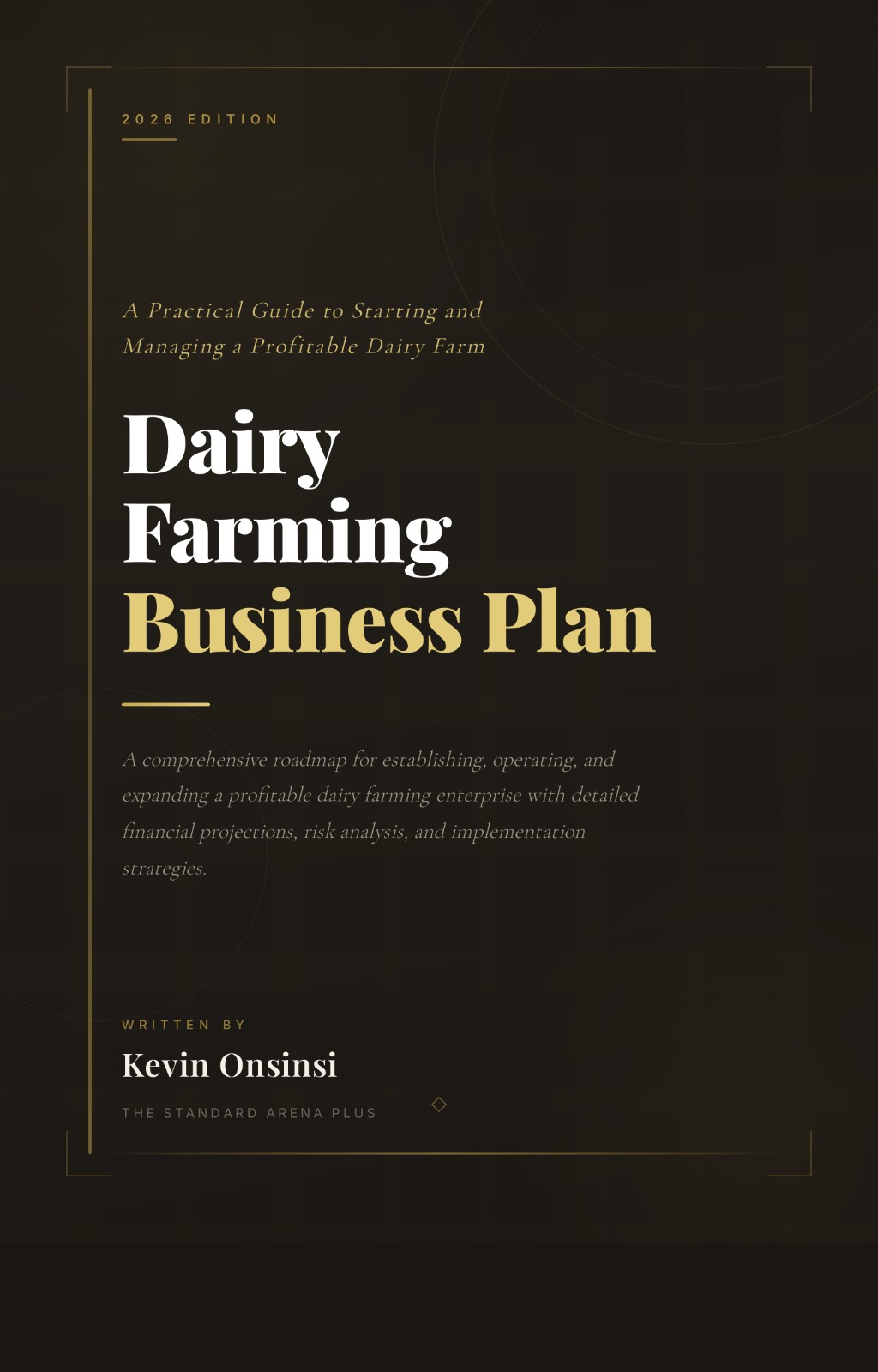
The dairy farming business plan covers key areas including market analysis, marketing strategy, operations, startup requirements, costs, financial projections, SWOT analysis, risk analysis and implementation.
Download the Dairy Farming Business Plan:
https://www.thestandardarena.co.ke/downloads/
Final Thoughts
Dairy farming can become a sustainable source of income when it is managed as a business. Before purchasing animals, assess your land, water supply, feed availability, target market and available capital.
A clear business plan can help you estimate your investment, identify potential risks and establish a practical strategy for building a productive dairy farm.