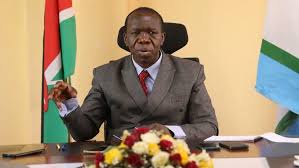
Prof. Shibairo Reappointed MMUST Vice Chancellor for Second Term

HomeNewsEducation

Prof. Shibairo Reappointed MMUST Vice Chancellor for Second Term

The second term is expected to provide an opportunity for the university to build on programmes and initiatives introduced during his first tenure while addressing emerging challenges in higher education.

What KPSEA and KJSEA Supervisors and Invigilators Must Do Per KNEC Rules
Ruto Sets Deadline for Nationwide School Meals Programme 2027
KJSEA Results to Be Released in December as KCSE, KPSEA Results Set for January 2027
Bungoma, Kakamega Teachers Dominate Western Region Teachers’ Day Run
Borabu NG-CDF Announces Sh10,000 Support for Students Joining Mecheo Secondary School

Professor Solomon Shibairo has been reappointed as the Vice Chancellor of Masinde Muliro University of Science and Technology (MMUST) for a second term, allowing him to continue leading the institution’s academic and administrative agenda.

His reappointment provides continuity at the university as MMUST continues to pursue its mandate in teaching, research, innovation and community engagement.

As Vice Chancellor, Prof. Shibairo oversees the university’s overall operations and works with the institution’s management, Senate, Council, staff and students in implementing its strategic priorities.

The second term is expected to provide an opportunity for the university to build on programmes and initiatives introduced during his first tenure while addressing emerging challenges in higher education.

MMUST, based in Kakamega County, is one of Kenya’s public universities and has established itself as an institution with a strong focus on science, technology, engineering and other academic disciplines.

The university serves students from across the country and has continued to expand its academic programmes, research activities and partnerships.

Prof. Shibairo’s continuation in office comes at a time when Kenyan universities are navigating several issues, including financing, infrastructure development, research funding, student welfare and the changing demands of the labour market.

University leadership has increasingly been required to balance academic quality with financial sustainability while ensuring institutions remain responsive to national development needs.

During his second term, attention is expected to remain on strengthening teaching and learning, supporting research and innovation, improving university infrastructure and enhancing opportunities for students and staff.

The Vice Chancellor will also be expected to work closely with various stakeholders, including government agencies, industry partners, academic institutions and local communities.

Research and innovation remain important areas for universities seeking to contribute to Kenya’s development. Institutions such as MMUST play a role in generating knowledge and developing solutions to challenges affecting communities and different sectors of the economy.

The university’s location in Western Kenya also gives it an important role in supporting development within the region through education, research, technology and community outreach.

Prof. Shibairo’s reappointment is therefore expected to provide stability as the institution implements its long-term plans.

The second term will also present an opportunity to strengthen collaboration between the university administration and its staff and students. Effective engagement with these groups remains important in addressing concerns and ensuring smooth operations.

For students, continuity in leadership could mean continued implementation of academic and student-focused programmes. Staff members, meanwhile, will be keen to see progress in areas affecting their professional development and working environment.

The reappointment also places responsibility on the university leadership to maintain accountability and ensure that available resources are used effectively in support of the institution’s mandate.

As Prof. Shibairo begins his second term, attention will now turn to the priorities his administration sets for the coming years and how these will shape MMUST’s academic, research and institutional development.

The university community is expected to work with the administration in advancing the institution’s objectives and strengthening its contribution to higher education and national development.