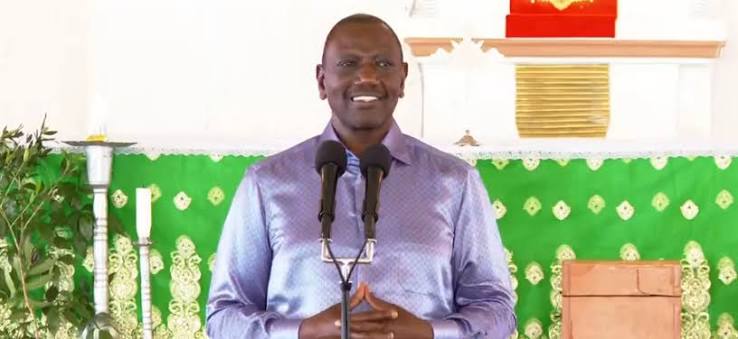
The President issued the directive during the Fourth Kenya Social Protection Conference in Kabete, Nairobi, where he called for the development of a comprehensive framework to support the expansion of the school feeding programme.
President William Ruto has directed the government to roll out a nationwide school meals programme from the first term of 2027, in a move aimed at expanding access to daily meals for millions of learners across the country.
The President issued the directive during the Fourth Kenya Social Protection Conference in Kabete, Nairobi, where he called for the development of a comprehensive framework to support the expansion of the school feeding programme.
Under the directive, the government is expected to put in place the necessary financing, policy and implementation arrangements before the beginning of the 2027 academic year. The programme is intended to cover learners in lower primary, upper primary and junior secondary schools.
Ruto tasked the Ministry of Education with working together with the Ministry of Labour and Social Protection, the National Treasury and other stakeholders to develop the framework required to achieve the planned rollout.
The planned expansion would significantly increase the number of learners receiving meals through government-supported programmes. According to Education News, the government currently provides meals to about 2.6 million learners and is targeting coverage of 10 million learners by 2030.
The school meals programme is part of the government’s wider social protection and education agenda, with school feeding viewed as a way of supporting vulnerable children and improving their ability to participate in learning.
Kenya’s home-grown school meals model also seeks to connect school feeding with local agricultural production. Under the approach, schools can source food from farmers and suppliers within their regions, creating markets for agricultural produce while supporting the provision of meals to learners.
However, the planned nationwide expansion is expected to require substantial financial and logistical preparations. The government will need to determine how the programme will be financed, how food will be procured and distributed, and how responsibilities will be shared between national and county institutions.
Recent reporting by Education News has highlighted a funding challenge facing the existing school feeding programme. The programme has been allocated about Sh3 billion annually, while the State Department for Basic Education has estimated that between Sh7.8 billion and Sh12.7 billion could be required annually for consistent coverage.
Before the 2027 deadline, the government is therefore expected to address issues including financing, procurement, school infrastructure and coordination among institutions involved in the programme.
The government has also been pursuing measures to make school feeding more sustainable. In July, it launched a nationwide data collection exercise to assess cooking energy use, kitchen infrastructure and operational costs in schools as part of efforts to support the expansion of the National School Meals Programme.
The proposed expansion comes as Kenya continues to confront challenges related to access to education, household poverty and learner welfare. For families struggling with the cost of providing food and education, school meals can provide important support.
With Term One of 2027 now set as the target for nationwide rollout, attention will shift to how quickly the government can establish the financing and implementation framework needed to turn the directive into a functioning programme across the country.
The success of the initiative will ultimately depend on adequate funding, effective coordination and the government’s ability to ensure that meals reach the targeted learners consistently.
