
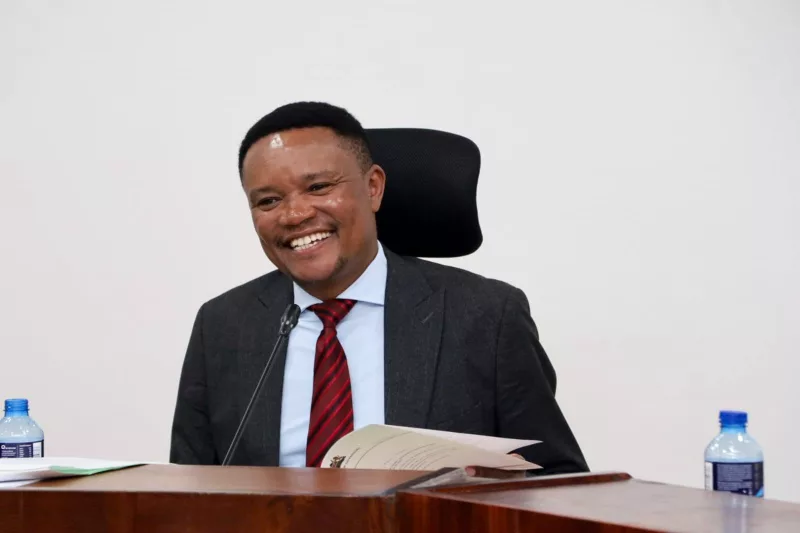
Molo MP Kuria Kimani, a Ruto ally, says he will join Gachagua's DCP 'in the morning' if UDA loses the 2027 election, arguing Kenyan parties are vehicles for power.
Molo MP Kuria Kimani ready to join Gachagua’s DCP
Molo MP Kuria Kimani has said he would join former Deputy President Rigathi Gachagua’s Democracy for the Citizens Party (DCP) if it wins the 2027 General Election, in a candid admission about how Kenyan politicians treat party loyalty.
Kimani, a staunch ally of President William Ruto, said he would waste no time joining Gachagua’s camp if the party forms the next government, arguing that politicians ultimately seek power rather than remain in opposition.
‘Of course’: Molo MP’s honest radio moment
Speaking in an interview with a vernacular radio station on Tuesday morning, October 27, the chairperson of the National Assembly Departmental Committee on Finance and National Planning was asked by the host whether UDA politicians would join DCP immediately if they lost the 2027 elections.
“Of course,” Kimani responded.
The presenter followed up by asking whether he would personally head to Gachagua’s camp immediately if the former Deputy President won the election.
“In the morning!” the MP replied.
Parties are vehicles for power, not loyalty
Kimani argued that political parties were often vehicles for gaining power rather than institutions to which politicians maintained unwavering loyalty, noting that even those who lose elections eventually seek to join the winning side.
“This is a trend that has happened over the years. When politicians knew there is usually no allegiance to political parties, they board political vehicles for convenience,” he said.
“All of us participate in elections to form government. No one goes to elections to go to opposition. We form coalitions so that we form government,” he said.
“In the event that you don’t form government; that is why you see people [election losers] in a rush to the other side,” he said.
UDM cited as the pattern in action
Kimani cited the United Democratic Movement (UDM), saying the party had been in opposition before joining the current broad-based government, and referred to its participation in previous political arrangements during former President Uhuru Kenyatta’s administration.
“The same has happened. If you look at the UDM party [which has technically been in opposition], this time they are in the broad-based government. During Uhuru’s time, they were in handshake; the other time they were in Grand Coalition,” he said.
“There are no people or party which goes to elections so that they can be in opposition,” he said.
Opposition’s endgame is government, Kimani says
He argued that opposition parties frequently seek entry into government after elections, even when they initially organise demonstrations against the political establishment.
“That is why you see immediately after elections; the opposition’s main aim is to join government, despite creating some chaos like demonstrations in the initial stages,” he said.
What the remarks say about 2027 alliances
The MP’s remarks highlight the fluidity of Kenya’s political alliances ahead of the 2027 elections, with politicians potentially reconsidering their party loyalties depending on which side secures power. Coming from a sitting chairperson of the National Assembly’s finance committee and a self-declared ally of the president, the admission offers a rare insider’s acknowledgement that defections, in both directions, are treated as normal political arithmetic. It also sets up a test for 2027: whether voters reward or punish the kind of convenience-driven party hopping Kimani described.
