Enhanced Rock Weathering: How Crushing Basalt Naturally Removes CO2 From the Atmosphere
Enhanced Rock Weathering: How Crushing Basalt Naturally Removes CO2 From the Atmosphere

As the global community races to find viable solutions to mitigate the climate crisis, scientists are increasingly looking backward—way back—to the Earth’s natural geological processes for answers. Among the most promising and fascinating carbon dioxide removal strategies is a process known as Enhanced Rock Weathering (ERW). By taking a naturally occurring phenomenon and dramatically accelerating it, researchers have found a way to use everyday rocks to permanently lock away atmospheric carbon dioxide.
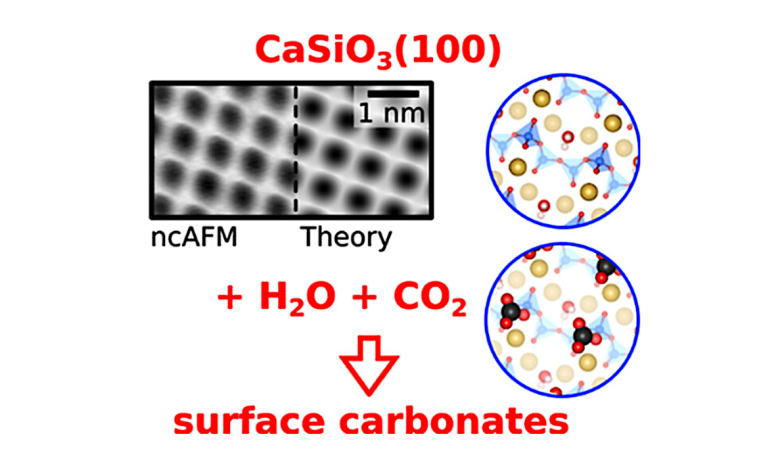
To understand how this works, one must first look at the natural carbon cycle. For hundreds of millions of years, the Earth has regulated its own climate through a process called silicate weathering. When rain falls, it absorbs carbon dioxide from the air, forming a weak carbonic acid. As this slightly acidic rainwater flows over mountains and rocks—particularly silicate rocks like basalt—it triggers a slow chemical reaction. The rainwater essentially dissolves tiny amounts of the rock, binding the carbon dioxide into stable bicarbonate ions. These ions are then washed into streams and rivers, eventually making their way to the ocean, where the carbon is safely stored for hundreds of thousands of years in the form of limestone or deep ocean sediments.
While this natural process is incredibly effective, it operates on a geological timescale, taking hundreds of thousands of years to make a meaningful dent in atmospheric carbon levels. Humanity does not have that long. This is where Enhanced Rock Weathering enters the equation.




The concept behind ERW is brilliantly simple: speed up the natural process by increasing the surface area of the rock. Mining operations and quarries already extract millions of tons of basalt—a highly reactive, abundant volcanic rock—for construction. Instead of just using this rock for roads and buildings, the ERW process involves taking basalt and crushing it into a fine dust or gravel. By pulverizing the rock, scientists exponentially increase the surface area exposed to rain and CO2, accelerating the weathering process from millennia down to just a few years or decades.
The logistical challenge of ERW has led to a unique partnership between the climate tech sector and agriculture. Spreading crushed rock across vast tracts of land would require massive infrastructure, but farmland already has the necessary equipment in the form of tractors and fertilizer spreaders. Therefore, crushed basalt is being applied directly to agricultural fields.
This method presents a remarkable environmental win-win scenario. As the rock dust sits on the farmland, it captures CO2 from the air with every rainfall. Simultaneously, it acts as a natural soil amendment. Basalt dust is rich in essential plant nutrients like potassium, phosphorus, magnesium, and calcium. As it weathers, it releases these nutrients into the soil, reducing the need for synthetic fertilizers. Furthermore, the dissolved silica in the basalt is absorbed by plant roots, fortifying the crops against pests, drought, and disease, which often leads to increased agricultural yields.
Enhanced Rock Weathering is no longer just a theoretical concept; it is actively being deployed and studied by leading climate research universities and pioneering carbon removal companies across North America, Europe, and Australia. Rigorous field trials are currently measuring exactly how much CO2 different types of crushed rock can absorb under various soil and climate conditions to verify its effectiveness for global carbon credit markets.
While ERW is not a silver bullet that replaces the urgent need to reduce global greenhouse gas emissions, it is a highly verifiable, scalable, and permanent carbon removal tool. By harnessing the ancient, reactive power of basalt, humanity can literally grind away at the excess carbon in our atmosphere, turning a pollutant into a resource that helps grow our food.