

Published: 22 May 2026 | Business & Technology.
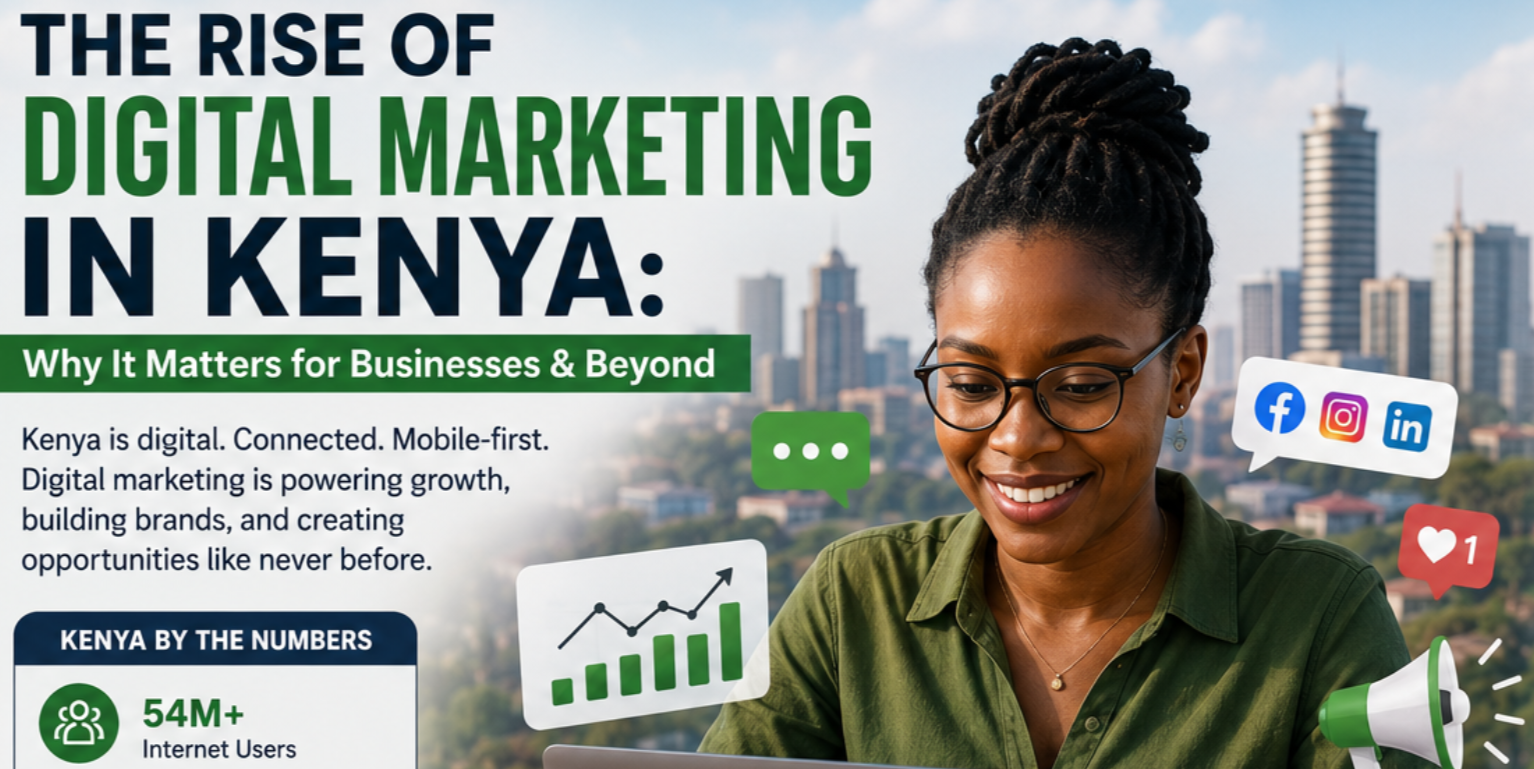
Digital marketing has transformed how Kenyan businesses reach customers, build brands, and drive sales. What started as a niche strategy for tech-savvy companies has become a mainstream necessity across industries. From retail stores in Nairobi to farming cooperatives in rural counties, businesses are shifting budgets from traditional advertising to digital channels.
This article examines the rise of digital marketing in Kenya, the forces driving its growth, and why it matters for businesses, content creators, and the broader economy.
The Scale of Digital Adoption in Kenya
Kenya has one of the most connected populations in Africa. Mobile phone penetration is high, and smartphone adoption continues to rise rapidly. Millions of Kenyans access the internet daily through affordable data plans and widespread 4G coverage, with 5G rolling out in major urban centres.
Social media platforms are deeply embedded in daily life. Kenyans spend hours each day on Facebook, Instagram, TikTok, and X (formerly Twitter). Messaging applications like WhatsApp have become primary channels for business communication, customer service, and even transactions.
This level of connectivity creates an unprecedented opportunity for businesses to reach customers where they already spend their time. A billboard on a busy highway might reach thousands of people per day, but a well-targeted social media advertisement can reach a specific audience of thousands for a fraction of the cost.
Why Businesses Are Moving Online
Several factors explain the rapid shift toward digital marketing in Kenya.
First, traditional advertising has become expensive. Television airtime, radio spots, newspaper pages, and billboard space require significant budgets that many small and medium-sized businesses cannot afford. Digital marketing offers entry points at virtually any price level, from a few hundred shillings per day for social media ads to larger budgets for comprehensive campaigns.
Second, digital marketing provides measurable results. A business owner can see exactly how many people viewed an advertisement, how many clicked through to a website, and how many made a purchase. This level of transparency was impossible with traditional media, where businesses could only guess at their return on investment.
Third, targeting capabilities have improved dramatically. Digital platforms allow businesses to show advertisements only to people who match specific criteria: age, location, income level, interests, browsing behaviour, and even recent purchase history. A boutique in Westlands can show ads only to women living within five kilometres who have shown interest in fashion. A university can target advertisements to recent secondary school graduates in specific counties. This precision reduces waste and improves results.
The Industries Leading Digital Adoption
Certain sectors in Kenya have embraced digital marketing more aggressively than others.
The financial services industry was an early adopter. Banks, mobile money providers, and digital lenders use social media, search engine advertising, and email marketing to acquire customers and promote new products. The competition in this sector is intense, and digital marketing provides a way to reach customers faster than traditional branch-based acquisition.
Retail and e-commerce have also shifted significantly online. Businesses that once relied solely on physical foot traffic now maintain active social media presences, run targeted advertisements, and process orders through WhatsApp and Instagram. The pandemic accelerated this trend, and it has not reversed.
The entertainment industry, including music, film, and live events, relies heavily on digital marketing to build audiences and sell tickets. Artists use social media to release new music, announce tours, and engage with fans. Event organisers use targeted ads to reach potential attendees based on their music preferences and location.
The hospitality and tourism sector uses digital marketing to attract both domestic and international visitors. Hotels, lodges, tour operators, and airlines showcase their offerings through visually rich content on Instagram, Facebook, and TikTok, targeting users based on travel intent and past behaviour.
The Creator Economy and Digital Marketing
The rise of digital marketing has fueled the growth of Kenya’s creator economy. Content creators, influencers, and digital entrepreneurs have built careers around producing content that attracts audiences, which brands then pay to access.
Instagram leads in converting creator views into paid partnerships, followed by Facebook, while TikTok has the largest audience reach but lower conversion rates. Sponsored posts from small and medium-sized enterprises typically range from tens of thousands to hundreds of thousands of shillings, while large corporations pay significantly more.
However, challenges remain. Many creators report delayed payments, low earnings, and exploitation. Brands struggle to find talent that aligns with their vision and values. A significant percentage of digital projects involving influencers never materialize due to lengthy internal processes and lack of transparency.
Platforms like The Standard Arena have emerged to address these gaps. By providing a transparent, AI-powered marketplace, such platforms aim to connect creators directly with brands, streamline project execution, and ensure timely payments.
Challenges Facing Digital Marketing in Kenya
Despite its growth, digital marketing in Kenya faces several obstacles.
Data costs, while lower than in the past, remain a barrier for some users. Video-heavy content, which drives high engagement, consumes significant data. Marketers must balance production quality with accessibility.
Digital literacy varies widely across the population. While urban professionals are comfortable online, rural residents and older Kenyans may be less familiar with social media and e-commerce. Businesses must consider these differences when designing campaigns.
Fraud remains a concern. Fake followers, bots, and engagement manipulation distort performance metrics. Brands waste significant portions of their influencer marketing budgets by prioritizing likes and comments over revenue tracking.
Regulation is still evolving. Data protection laws affect how businesses collect and use customer information. Advertising standards for digital media are less established than for traditional media, creating uncertainty for marketers.
The Future of Digital Marketing in Kenya
Several trends will shape the next phase of digital marketing in Kenya.
Artificial intelligence is becoming central to campaign management. AI tools help businesses predict which audiences will respond to which messages, optimise bidding strategies in real time, and generate content at scale. Businesses that adopt AI-driven marketing will outperform those that rely on manual processes.
Video content will continue to dominate. Short-form video, popularized by TikTok and Instagram Reels, captures attention more effectively than static images or text. Marketers will invest more in video production, though the trend toward authentic, low-production content means expensive equipment is not always necessary.
Personalisation will become more sophisticated. Customers expect brands to understand their preferences and deliver relevant messages. Generic mass advertising will become less effective as personalisation capabilities improve.
Local platforms will gain ground. While global platforms like Facebook and Google currently dominate digital advertising spending, local platforms tailored to Kenyan businesses and creators may capture increasing market share. These platforms can offer local currency payments, Swahili and English support, and an understanding of local market dynamics.
Integration of digital and physical channels will deepen. Businesses will blur the line between online and offline marketing, using digital ads to drive foot traffic to physical stores and using in-store experiences to encourage online engagement.
Why Digital Marketing Matters Beyond Business
The rise of digital marketing has implications that extend beyond individual businesses.
For the economy, digital marketing creates jobs. Beyond the creators who appear in advertisements, the industry employs photographers, videographers, graphic designers, copywriters, social media managers, data analysts, and strategists. These are knowledge-based roles that offer better pay and working conditions than many traditional jobs.
For consumers, digital marketing provides information about products and services that meet their needs. Targeted advertising, when done well, reduces the effort required to find relevant offerings. Consumers see fewer irrelevant messages and more useful recommendations.
For society, digital marketing can support public health campaigns, voter education, and social messaging. The same targeting capabilities that help a brand sell products can help a government agency promote vaccination or a non-profit organisation raise awareness about environmental conservation.
Digital marketing in Kenya has moved from experimental to essential. Businesses that ignore it do so at their own risk, as competitors capture the attention of connected consumers. The industry will continue to evolve, shaped by technological advances, regulatory changes, and shifting consumer behaviour.
For businesses, the message is clear: invest in digital marketing capabilities, measure results rigorously, and adapt continuously. For creators, the opportunity is significant, but navigating the landscape requires patience, professionalism, and the right partnerships. For the broader economy, digital marketing represents a shift toward more efficient, more measurable, and more inclusive ways of connecting buyers and sellers.